Why Most SOP Libraries Go Stale
SOP libraries go stale when they are maintained outside the work they are supposed to describe. Useful company knowledge needs ownership, review, and a way for new lessons from daily work to become official without turning into a documentation chore.
On this page
An SOP library is a place where a company stores standard operating procedures: how to qualify a lead, onboard a client, hand off a project, handle refunds, prepare a report, close the month, or perform any recurring piece of work. The impulse is sensible. If the work repeats, the company should not need the same experienced person to explain it from scratch every time.
Most SOP libraries go stale because they are maintained outside the work they are supposed to describe.
Someone documents the process after a push to get organized. The business keeps moving. A customer exception changes the real rule. A new hire asks a question the document does not answer. A manager quietly adjusts the handoff because the old version never gave delivery the context they needed. Sales changes the offer language. Finance changes the timing. The document remains official, but the team has already moved on.
Staleness usually is not a character flaw. The design is the problem. The business learns inside the work, but the documentation only changes when someone remembers to go update a separate library.
That separation matters more now because AI can read and reuse company knowledge. A stale SOP is no longer only an old page a new employee may ignore. It can become the source material for a proposal draft, a lead review, an onboarding answer, a project summary, or an agent preparing work on a schedule. If the official context is wrong, AI can make the wrong thing look orderly.
Some companies do need more discipline around documentation, but discipline alone is rarely enough. The better question is how knowledge gets back from the work into the system the company trusts.
The Real Process Keeps Moving
Most procedures are written as if the process is stable.
In practice, the real process changes in small ways all the time. A proposal section gets rewritten after three prospects ask the same question. A project handoff changes because the delivery team keeps missing a detail that sales thought was obvious. A customer type that used to be a good fit becomes a distraction. A phrase in a first reply starts attracting the wrong kind of work. A report that once helped leadership now hides the one metric that matters.
Those changes do not always arrive as formal decisions. They show up as corrections.
"Use the newer version of that scope language."
"Don't send that until someone checks the margin."
"That client type needs a smaller first step."
"We stopped promising that last quarter."
"The procedure says to assign it to operations, but delivery actually owns that now."
This is where SOP libraries begin to drift. The real process is being updated socially: in comments, corrections, chat threads, meetings, and the memory of people who keep seeing the same exception. The official procedure changes only if someone turns that lived correction into an approved update.
Many companies never build that bridge. They document the process, then ask people to maintain the document as a separate act of virtue. A few people do it for a while. Then the week gets full, the exception feels too small to formalize, and the library starts becoming a record of how the company used to think.
Stale SOPs Create Two Systems
Once people stop trusting the library, the company ends up with two operating systems.
There is the written system: the SOPs, templates, checklists, onboarding docs, and official process maps. Then there is the live system: the way experienced people actually get the work done. The live system knows which step is outdated, which customer exception matters, which field in the CRM cannot be trusted, which template is no longer safe to use, and which manager needs to review a decision before it moves.
The written system is easier to find. The live system is more accurate.
That split is awkward for any company, and especially costly in an established owner-operated business where a few people often carry the working version of the truth. New employees read the official process, then learn the real one through interruption. Managers answer the same background questions. Senior people correct drafts that followed the documented steps but missed the judgment behind them.
The result is not only wasted time. The company quietly loses confidence in its own knowledge. People stop asking, "What does the SOP say?" and start asking, "Who knows how we really do this now?"
That question routes the work back to the people the documentation was supposed to relieve.
The Missing Piece Is Ownership
An SOP library usually fails when no one owns the truth of a page.
Someone may own the folder. Someone may own the project of documenting. Someone may be responsible for keeping the wiki clean. But that is different from owning whether the lead-qualification standard is still true, whether the refund policy reflects current judgment, or whether the project handoff gives delivery what they actually need.
Useful operating knowledge needs a human owner close enough to the work to recognize when the page is wrong.
That owner does not have to write every word. In many cases, they should not. A coordinator, manager, AI assistant, or skill can draft the update. The owner decides whether the update is true and whether the company should treat it as official. That review step is the difference between a knowledge system and a shared notes folder.
Without ownership, stale pages linger politely. Everyone knows they are a little wrong, but no one has authority, time, or confidence to replace them. With ownership, an outdated page becomes a work item with a responsible person attached to it.
This sounds administrative, but trust often comes from exactly that kind of ownership. A team can use the library only if it believes someone is responsible for keeping the important parts true.
Useful Knowledge Needs Two Speeds
One reason SOP maintenance feels heavy is that companies treat every update as if it has to become official immediately.
That is too much pressure for daily work. People notice small things constantly: a supplier needs more notice, a customer asks a question that the onboarding doc does not answer, a phrase in a proposal causes confusion, a new employee finds a gap in the checklist, an AI draft repeats an old assumption. If every observation requires someone to rewrite the official procedure before it can be captured, most observations will disappear.
But the opposite approach is not better. If every observation immediately becomes official, the library becomes noisy. A half-understood exception turns into a rule. A one-off customer preference gets treated as policy. A temporary workaround becomes the new standard because it was the last thing someone wrote down.
Company knowledge needs two speeds.
Durable context is the official version: the approved knowledge people and AI systems should rely on until a reviewed change replaces it. It should be harder to change because it carries authority. Pricing rules, service standards, qualification criteria, escalation paths, approved language, and examples of good work belong here once someone responsible has reviewed them.
A learning is different. A learning is a lesson worth keeping before the company has decided whether it should become official. Learnings need to be easy to capture while the work is fresh. They also need to be clearly marked as unreviewed so no one mistakes them for policy.
That middle state matters. It lets the business remember without pretending every fresh observation is settled truth.
SOPs Should Explain the Work, Not Replace the Tools
Another reason procedure libraries become messy is that they try to hold live operating data.
Tasks belong in the project tracker. Customer records belong in the CRM. Meetings belong in the calendar or notes system the team already uses. Invoices belong in the finance tool. If the SOP library starts duplicating today's project status, today's customer detail, and today's task list, it will lose. Live data changes too quickly, and the team will trust the operational tool before it trusts the document.
The library should explain the tools and the judgment around them.
It should say which system owns the customer record, what a clean handoff needs to include, which fields matter, which tool wins when records disagree, who approves exceptions, what a good update looks like, and where the work should move next. It should not try to become a second CRM, a second project tracker, or a second inbox.
This boundary keeps the library useful. The operating tools hold today's motion. The library holds the standard that should outlast today's motion.
A company context library works best when it respects that split. It makes the business readable without pretending to be the business itself.
AI Raises the Cost of Staleness
Before AI, stale documentation created friction mostly through people.
A new employee followed the wrong process, then got corrected. A manager searched for an answer, distrusted the page, and asked someone instead. A template produced a weak first draft. Annoying, but usually contained.
AI changes the stakes because it can make stale knowledge more productive.
If a model retrieves an old procedure and drafts from it, the output may look polished. If a skill uses outdated offer language, the proposal may sound more confident than the old document ever did. If an agent works from an old escalation path, they may route work to the wrong person again and again, neatly and on schedule.
AI is not uniquely careless. It depends on the context it is given. When the official knowledge is accurate, AI can help apply it consistently. When the official knowledge is stale, AI can preserve the wrong version of the business with a professional tone.
That is why the knowledge loop matters before the agent does. If the company has no way for corrections to become reviewed context, every AI workflow eventually depends on someone noticing the same mistake by hand.
The model may be new. The failure mode is old. The company has not closed the loop between work and memory.
The Better System Is a Loop
The useful alternative to a stale SOP library is not a more ambitious documentation sprint.
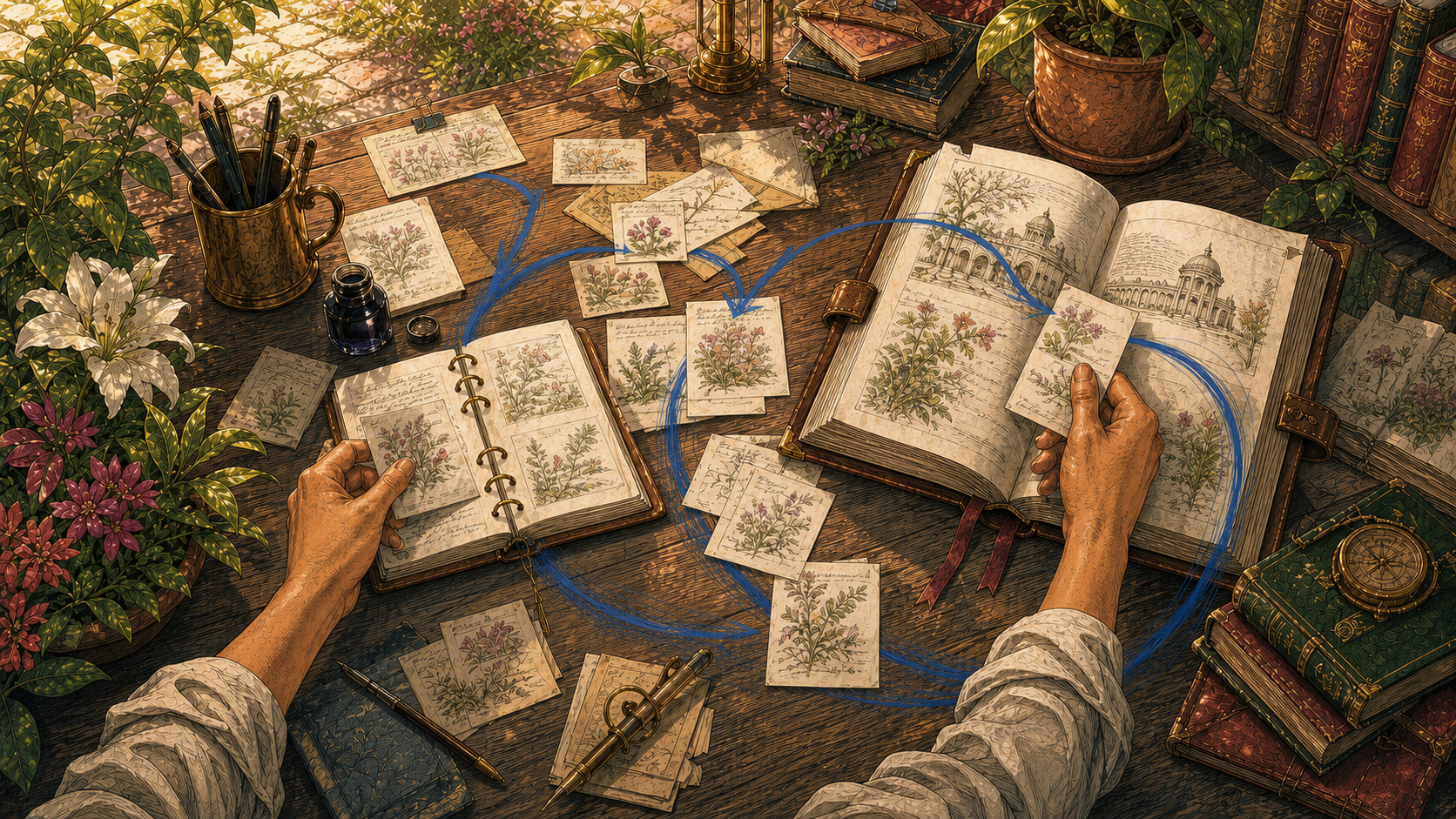
The better system is a loop: work produces lessons, lessons are captured, responsible people review them, approved changes update the official context, and future work benefits from the update.
That loop does not need to be theatrical. A customer reply gets corrected because it used outdated language. The correction becomes a captured learning. During review, the owner sees that the old language is still in the approved context. They update the official page, approve the change, and the next draft starts closer to the truth.
A new employee asks the same onboarding question twice in a month. That becomes a learning. The reviewer sees the pattern and adds a short explanation to the onboarding context. The next employee may never need to ask.
A weekly report keeps misclassifying ordinary variance as risk. The correction becomes a learning. The durable context gets a clearer definition of risk. The reporting skill improves because the business got clearer.
The real value of maintaining company knowledge is not tidiness or a beautiful library. The value is changing the path that repeated explanation takes through the company.
In a stale system, the same explanation returns to the same experienced person. In a living system, the explanation has somewhere to go. It becomes context. It becomes an example. It becomes a better first draft. It becomes one less interruption.
What to Do With the Existing SOP Library
If a company already has an SOP library, the right move is usually not to throw it away.
There is often useful material inside it: old standards, original reasoning, checklists that still work, examples worth keeping, definitions of roles, and reminders of decisions the company made for good reasons. The problem is that the library needs sorting by truth and usefulness, not admiration for the amount of work that went into it.
Start with the pages people still touch. Which procedures are used in onboarding? Which ones support revenue, delivery, quality, reporting, or customer communication? Which ones would create real confusion if they were wrong? Those pages deserve review first.
Then look for mismatch. Where does the page disagree with the current tool? Where does the team quietly ignore a step? Where does a manager correct the same detail after someone follows the documented process? Where does an AI draft expose an old assumption? Where does the official procedure describe the easy case but not the exception everyone actually worries about?
Each mismatch is more than a documentation task. It is evidence of a place where the company learned something and failed to turn that learning into durable context.
That is the practical standard. Do not ask whether the SOP library is complete. Ask whether it gives people and AI the current judgment they need to do the next piece of work well.
The Standard Is Trust
A stale SOP library creates a strange kind of organizational debt. It looks like knowledge, but people have to verify it through memory before they can use it. The page is no longer the answer. The page is a clue.
That is hard on people. AI has even less room to infer the missing truth.
AI systems do not know which page the team quietly stopped trusting unless the company has captured that fact somewhere. They do not know that the real process changed in last week's meeting, or that the template is fine except for one paragraph, or that the exception became common enough to deserve its own rule. They only know the context available to them.
This is why company knowledge has to become a maintained operating layer, not a periodic documentation project. It needs ownership, access boundaries, examples, review, and a way for new lessons to enter without becoming official too soon.
The aim is not perfect documentation. Perfect documentation is usually stale by the time everyone finishes admiring it.
The better aim is a business that stays readable where the work depends on shared judgment.
When the company learns, the system needs a place to put the lesson. When the lesson proves true, the official context needs a way to change. When the official context changes, people and AI need to work from the better version.
That is how an SOP library stops being a museum of past process and starts becoming part of how the company keeps itself current.